How Does an Axial Fan Work? A Practical Guide
Learn how an axial fan moves air, how its blades create pressure, and how speed, resistance, and installation affect performance.
Read More
The axial fan lifespan is not one universal number. Depending on the fan class, bearings, speed, temperature, contamination, duty cycle, and maintenance, useful life may range from tens of thousands of operating hours to much longer in a properly selected heavy-duty installation. For many fans, the bearings and their lubricant are the first life-limiting components.
A published life figure also needs context. A bearing L10 rating, an MTBF value, a warranty period, and the expected service life of the complete fan describe different things. This guide explains those differences, shows how to convert operating hours into calendar years, and provides practical steps for extending fan life without relying on unsupported promises.
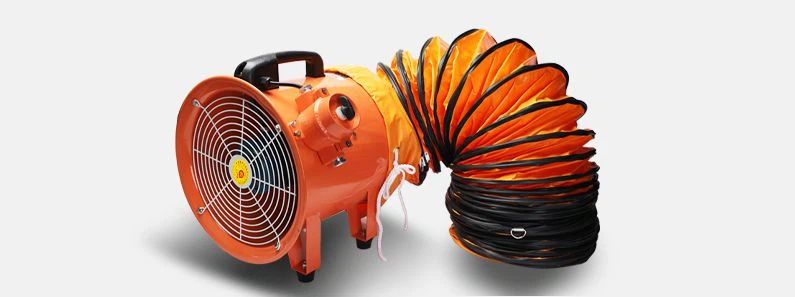
As a broad engineering reference, small clean-air fans may use bearings with an L10 design life around 20,000 operating hours, while medium light-industrial fans may be designed around 40,000 hours. Heavy-duty fan bearings may be specified for 100,000 hours or more. These are not guarantees for every axial fan and do not mean the entire fan will fail at that hour.
The most reliable number is the value published for the exact model at a stated temperature, speed, load, mounting position, and confidence level. A well-made fan can remain serviceable after its nominal bearing-life point, while a poorly selected fan can fail much earlier because of heat, dirt, vibration, electrical problems, or excessive system resistance.
| Operating schedule | 20,000 hours | 40,000 hours | 70,000 hours |
|---|---|---|---|
| 8 hours/day, 5 days/week | About 9.6 years | About 19.2 years | About 33.7 years |
| 12 hours/day, every day | About 4.6 years | About 9.1 years | About 16.0 years |
| 24 hours/day, every day | About 2.3 years | About 4.6 years | About 8.0 years |
These conversions assume continuous use at the stated schedule and no downtime. Calculate calendar life with years = rated hours ÷ annual operating hours. The calculation is useful for planning, but real service conditions still control the outcome.
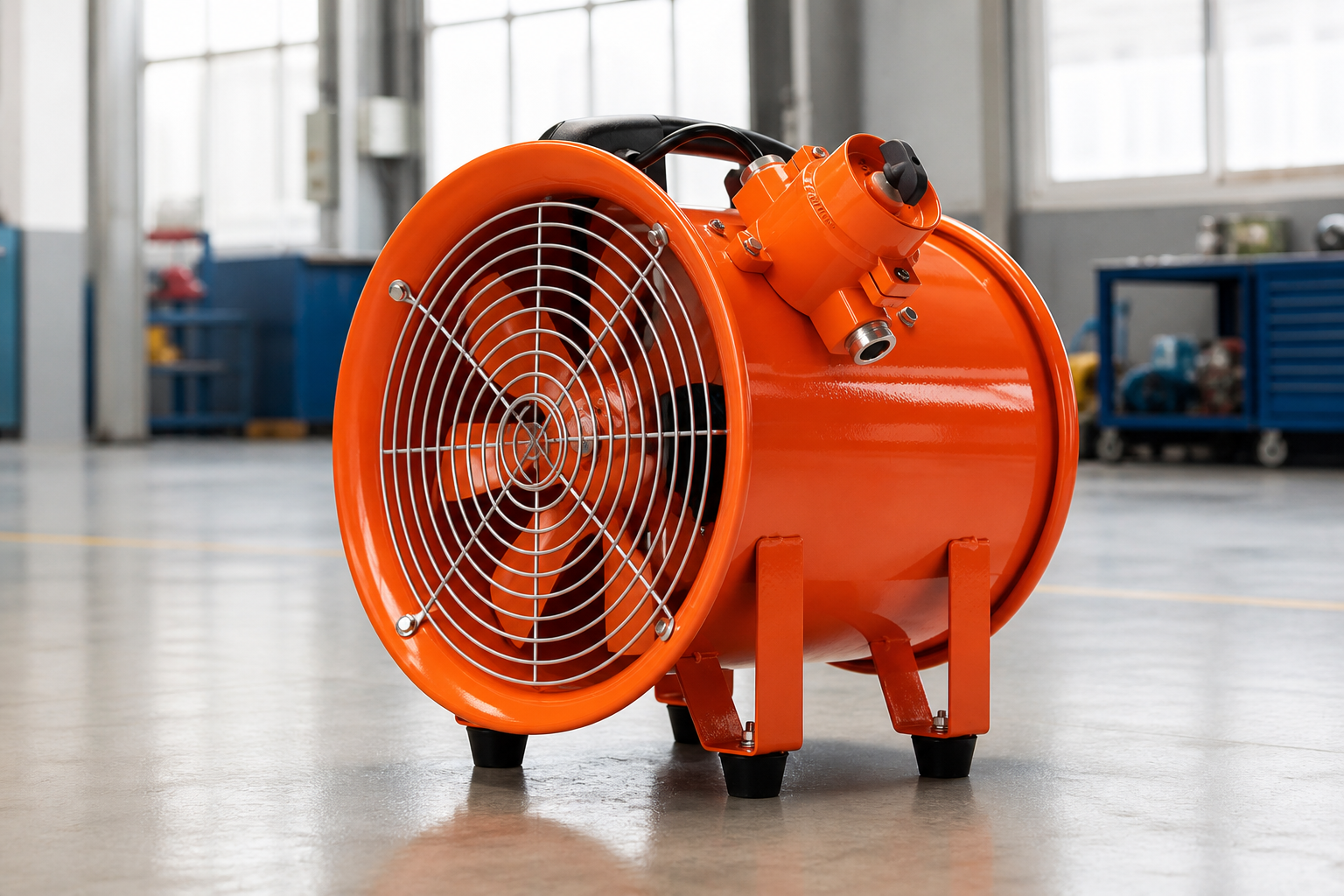
L10, sometimes called B10, is a statistical bearing-life measure. An L10 value means that 90 percent of a sufficiently large population of identical bearings are expected to reach or exceed that number of revolutions or hours under the specified load and operating conditions. It does not mean that every bearing fails at the rating, and it is not the average life of the population.
The calculation normally considers bearing capacity, equivalent load, and rotational speed. Grease life, contamination, misalignment, temperature, and installation quality can make practical service life shorter than the theoretical fatigue life. The fan-bearing engineering overview describes how L10 life varies across small, industrial, and heavy-duty fans and notes that excessive axial load can reduce bearing life.
| Term | What it describes | What it does not prove |
|---|---|---|
| L10 or B10 life | A statistical bearing-life threshold at a stated reliability level | The guaranteed life of every fan assembly |
| MTBF | A population reliability metric for repairable equipment | The time when an individual unit will fail |
| Expected service life | An application estimate based on design and operating conditions | A universal rating independent of environment |
| Warranty | The manufacturer’s commercial coverage period and terms | The physical maximum life of the product |
When comparing products, ask which metric is quoted, what temperature and speed were assumed, whether the value applies to the bearing or complete fan, and whether continuous operation is permitted.
Bearings support the rotating assembly and carry radial and axial loads. Their lubricant must maintain a protective film without drying, oxidizing, leaking, or becoming contaminated. Heat can shorten grease life even when the bearing’s calculated fatigue capacity appears adequate. Omron’s axial-fan guidance states directly that axial-fan service life is generally determined by the bearings.
High winding temperature accelerates insulation aging. Causes include excessive ambient temperature, blocked cooling, low or high voltage, phase imbalance, frequent starts, overloading, or operation outside the approved speed range. EC fans also contain power electronics, so surge exposure, moisture, and poor heat dissipation must be considered.
Blade erosion, corrosion, deposits, impact damage, loose guards, and distorted mounts can create imbalance. The additional vibration loads bearings and fasteners and may lead to fatigue cracking. In abrasive, corrosive, or high-temperature air, material selection becomes a primary life factor rather than a secondary detail.
For a broader explanation of the construction and airflow path, read the axial fans guide. If you are choosing a compact model for an enclosure, the small axial fan selection guide covers airflow, pressure, supply, and installation requirements.
Motor technology also changes the control and failure profile. The AC vs DC axial fan comparison explains supply and feedback differences. For variable-demand ventilation, review the EC external rotor exhaust fan; for straightforward mains-powered duty, see the AC external rotor axial fan.
| Interval | Suggested checks | Action trigger |
|---|---|---|
| Before startup or after installation | Rotation direction, clearance, guards, fasteners, wiring, and free movement | Contact, rubbing, incorrect rotation, or loose mounting |
| Routine visual check | Dust, corrosion, damaged blades, blocked inlet, cable condition, and unusual noise | New deposits, damage, discoloration, or sound change |
| Planned maintenance | Vibration, current, temperatures, airflow, fastener torque, and approved lubrication | Trend exceeds baseline or manufacturer limit |
| After an abnormal event | Impact, water ingress, overload trip, surge, overheating, or process upset | Do not restart until the cause and damage are assessed |
Exact intervals depend on risk and operating conditions. A continuously operating fan in a dusty, hot process requires closer monitoring than an intermittently used fan in a clean electrical cabinet. Follow the product manual and site maintenance program rather than treating this table as a replacement for manufacturer instructions.
Stop the fan when continued operation could create a safety risk. Isolate electrical power before inspection and follow applicable lockout procedures. Replacing a bearing or motor without correcting imbalance, contamination, or system resistance often leads to another premature failure.
Repair may be practical for a large industrial fan with replaceable bearings, a sound impeller, available parts, and a serviceable motor. Replacement is often more economical for small integrated units, sealed motors, obsolete models, severely corroded structures, or fans whose efficiency and controls no longer suit the system.
Compare the cost of repair, balancing, downtime, energy, remaining component life, and failure consequences. Any replacement must match the original airflow and pressure duty, dimensions, power supply, control signal, protection rating, temperature range, and certifications.
No. It may describe a bearing rating or reliability estimate under defined conditions. Ask what metric is used and which temperature, speed, load, and reliability level apply.
Ball bearings often suit higher loads, speeds, temperatures, and varied mounting orientations, but the complete design and application still matter. A poor-quality or overheated ball-bearing fan can fail before a correctly applied alternative.
Continuous running accumulates hours faster, but a fan rated for continuous duty may experience fewer start-stop stresses. Temperature, load, cleanliness, and lubrication usually matter more than the calendar alone.
Lower speed can reduce mechanical load, sound, and power, but only when the motor and controller support it and required airflow is maintained. Very low speed may reduce motor cooling in some designs.
Use condition, risk, measured performance, manufacturer life data, and maintenance history—not a universal calendar interval. Critical applications may use planned replacement before statistical end of life.
Provide model, bearing type and rating, speed, airflow and pressure point, operating hours, starts per hour, ambient and airstream temperatures, contamination, mounting, control method, vibration, and maintenance history.
The lifespan of an axial fan is best expressed as a range supported by model-specific bearing data and real operating conditions. Bearings and lubricant often set the mechanical limit, while temperature, contamination, vibration, electrical stress, and incorrect selection can shorten service dramatically.
Use L10 and MTBF figures correctly, convert hours using the actual duty schedule, and monitor condition over time. For a model-level recommendation, send your airflow, pressure, power supply, temperature, environment, and operating schedule through the Yian Electric contact page.